
In today’s jewelry industry, rising material prices are no longer the only challenge brands face. Increasing import duties, global trade uncertainty, and supply chain risks are putting serious pressure on profit margins—especially for fashion jewelry businesses operating in the US and Europe.
That’s exactly why more international buyers are turning to Vietnam jewelry manufacturing.
Vietnam has quickly become one of Asia’s fastest-growing sourcing destinations for OEM jewelry manufacturing, offering competitive production costs, skilled craftsmanship, and valuable trade agreement advantages that can help brands legally reduce import tariffs.
For businesses importing 316L stainless steel jewelry, brass jewelry, gold plated jewelry, or customized fashion accessories, understanding how to optimize duties can significantly lower overall landed costs and improve market competitiveness.
Today, reducing tariffs is no longer just a finance strategy—it’s a sourcing strategy.
Why Vietnam Is Becoming a Strategic Jewelry Sourcing Hub
Compared with traditional manufacturing markets, Vietnam offers a stronger balance between production cost, export flexibility, and tariff advantages.
The biggest reason?
International trade agreements.
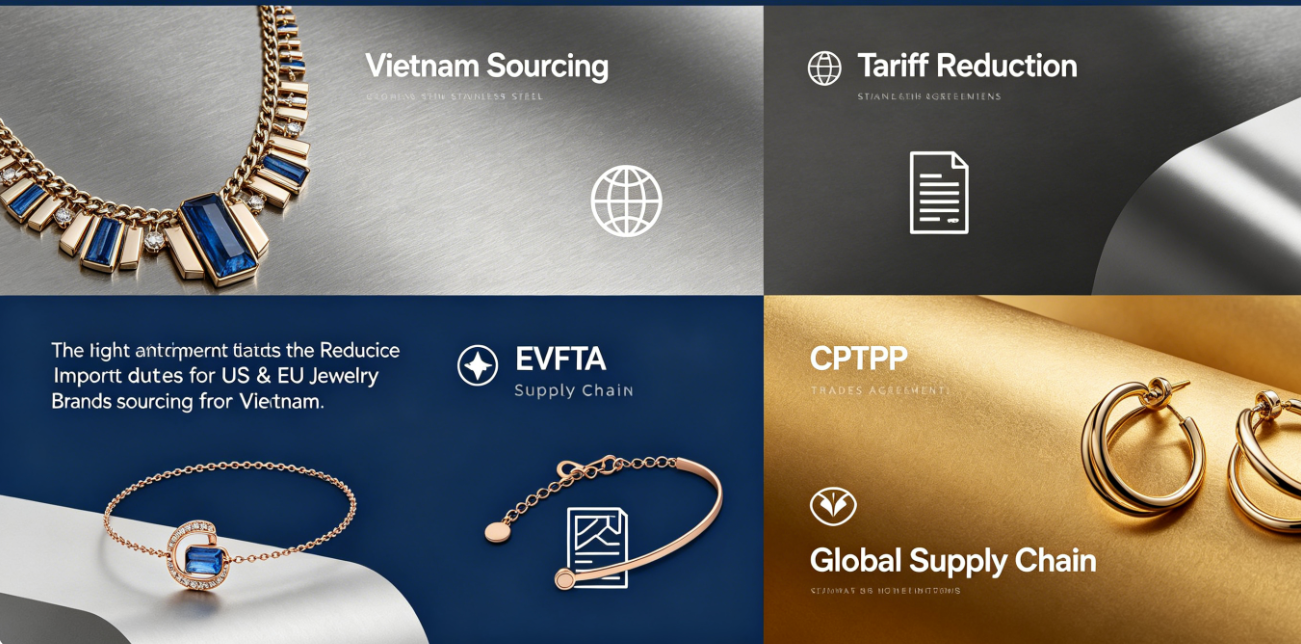
Vietnam has signed multiple free trade agreements that help overseas buyers reduce or eliminate certain import duties, especially for European markets.
Key agreements include:
EVFTA (EU–Vietnam Free Trade Agreement)
CPTPP
Regional export cooperation agreements
Growing global manufacturing partnerships
For many EU jewelry brands, sourcing from Vietnam can create significant tariff savings compared to importing from China.
At the same time, many US buyers are diversifying supply chains to reduce dependence on single-country sourcing and avoid long-term tariff uncertainty.
 Comparison Table
| Sourcing Factors | Vietnam | China | Other Southeast Asia |
|---|---|---|---|
| Tariff Advantages | Strong EU trade agreements | Higher tariff pressure | Limited coverage |
| Labor Cost | Competitive | Rising annually | Varies |
| Jewelry OEM Capability | Rapidly growing | Highly mature | Less specialized |
| Supply Chain Flexibility | High | High | Medium |
| Production Stability | Stable | Stable | Inconsistent in some regions |
| Best Product Categories | Fashion jewelry, stainless steel jewelry, OEM jewelry | Large-scale manufacturing | Basic accessories |
5 Effective Ways to Reduce Jewelry Import Duties
1. Use the Correct HS Code Classification
One of the most overlooked cost factors in importing jewelry is incorrect HS code classification.
Different products such as:
316L stainless steel jewelry
Brass jewelry
PVD plated jewelry
Gold plated fashion jewelry
may fall under completely different tariff categories.
Accurate classification helps brands avoid overpaying import duties and reduces customs clearance risks.
Experienced Vietnam jewelry suppliers usually provide support with export documentation and product categorization.
2. Apply for Certificates of Origin
To qualify for tariff reductions under agreements like EVFTA, importers often need a valid Certificate of Origin proving the goods were manufactured in Vietnam.
Without proper documentation, shipments may lose eligibility for reduced duty rates.
For many brands, this document alone can create substantial annual savings.
3. Shift Final Production Processes to Vietnam
Some jewelry brands strategically move final assembly, polishing, plating, engraving, or packaging to Vietnam to meet origin requirements.
This approach helps businesses:
lower tariff exposure
diversify manufacturing
improve supply chain flexibility
maintain competitive pricing
This model is becoming increasingly common among private label jewelry brands.
4. Optimize Material Selection
Material choice can directly affect both production costs and tariff efficiency.
That’s one reason why global demand for:
316L stainless steel jewelry
waterproof jewelry
PVD coated jewelry
brass fashion jewelry
continues to grow rapidly.
These materials offer excellent durability, modern aesthetics, and stronger cost control compared to precious metal jewelry.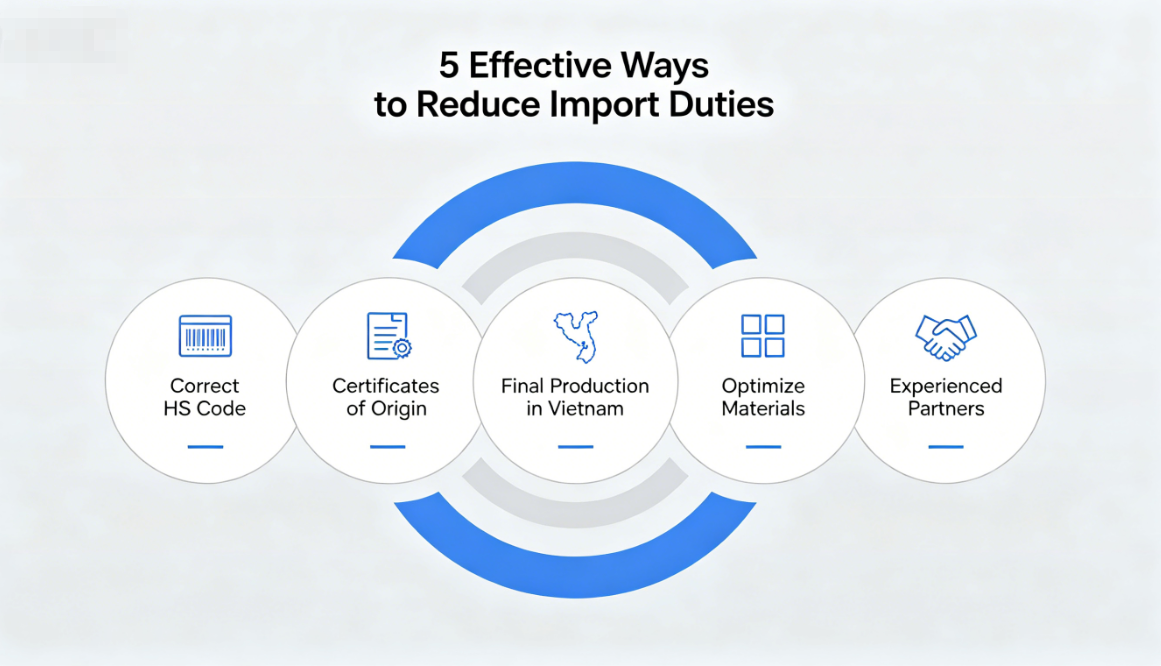 5.Partner with Experienced Export Manufacturers
An experienced OEM jewelry manufacturer in Vietnam understands:
export compliance
customs procedures
packaging regulations
international shipping standards
tariff documentation requirements
The right supplier doesn’t just manufacture products—they help brands reduce hidden operational costs across the entire supply chain.
Why More Jewelry Brands Are Moving Production to Vietnam
Vietnam is no longer viewed as just an “alternative” sourcing market.
It is rapidly becoming a global manufacturing center for modern fashion jewelry brands.
Key advantages include:
Lower manufacturing costs
Skilled jewelry craftsmanship
Strong OEM production capabilities
Better tariff opportunities
Reduced geopolitical sourcing risks
More flexible production volumes
Faster supply chain diversification outside China
For many brands, tariff savings combined with lower operating costs can significantly improve long-term profitability.
FAQ
Is sourcing jewelry from Vietnam cheaper than China?
In many cases, yes. Between lower labor costs, competitive manufacturing pricing, and tariff advantages, Vietnam can provide lower total landed costs for many jewelry categories.
Can EU buyers reduce import duties through EVFTA?
Yes. Products that meet origin requirements may qualify for reduced or zero tariffs under the EU–Vietnam Free Trade Agreement (EVFTA).
What documents are needed for reduced import duties?
Common documents include:
Commercial invoice
Packing list
Bill of lading
Certificate of origin
Correct HS code declaration