Introduction
A jewelry clasp is a small component with an important job: keeping a necklace or bracelet securely closed.
When a clasp fails, customers may lose the jewelry itself, along with valuable pendants or gemstones. For jewelry brands, this can lead to complaints, replacements, repair costs, and damage to brand reputation.
However, clasp quality is sometimes overlooked because buyers naturally focus on gemstones, materials, plating, and overall appearance.
For manufacturers, clasps are an essential part of jewelry quality control and functional product design.
In this guide, MCGA Jewelry explains common reasons why jewelry clasps fail and how proper design, manufacturing, assembly, and inspection can help reduce the risk.
1. Why Do Jewelry Clasps Fail?
Clasp problems can result from several factors, including:
Incorrect clasp size or design
Weak components or unsuitable materials
Insufficient spring tension
Poorly assembled connection rings
Excessive product weight
Wear during everyday use
Manufacturing defects
Importantly, the clasp is only one part of the closure system.
A necklace or bracelet may include a chain, jump rings, connecting rings, and a clasp. Each component must work together to provide a reliable closure.
For custom jewelry manufacturing, evaluating the complete structure is more effective than checking the clasp alone.
2. Choosing the Correct Clasp Size
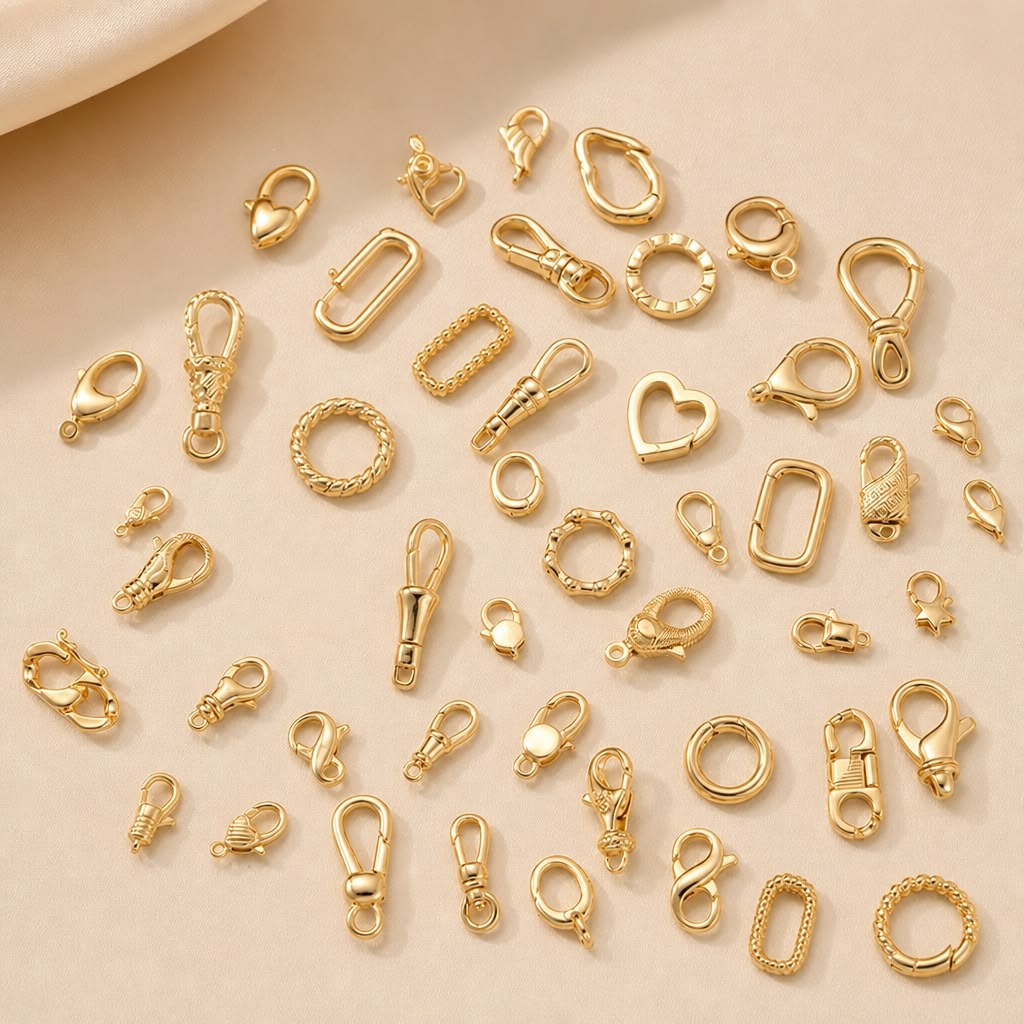
Clasp size affects both functionality and appearance.
A very small clasp may look elegant on a delicate necklace, but it may not be suitable for a heavier necklace or bracelet.
On the other hand, an oversized clasp can make delicate jewelry look unbalanced and affect wearing comfort.
When selecting a clasp, manufacturers should consider:
Total jewelry weight
Chain thickness and structure
Product dimensions
Intended use
Ease of opening and closing
Overall design proportions
The goal is to balance structural requirements, usability, and appearance.
3. Spring Mechanisms Require Functional Testing
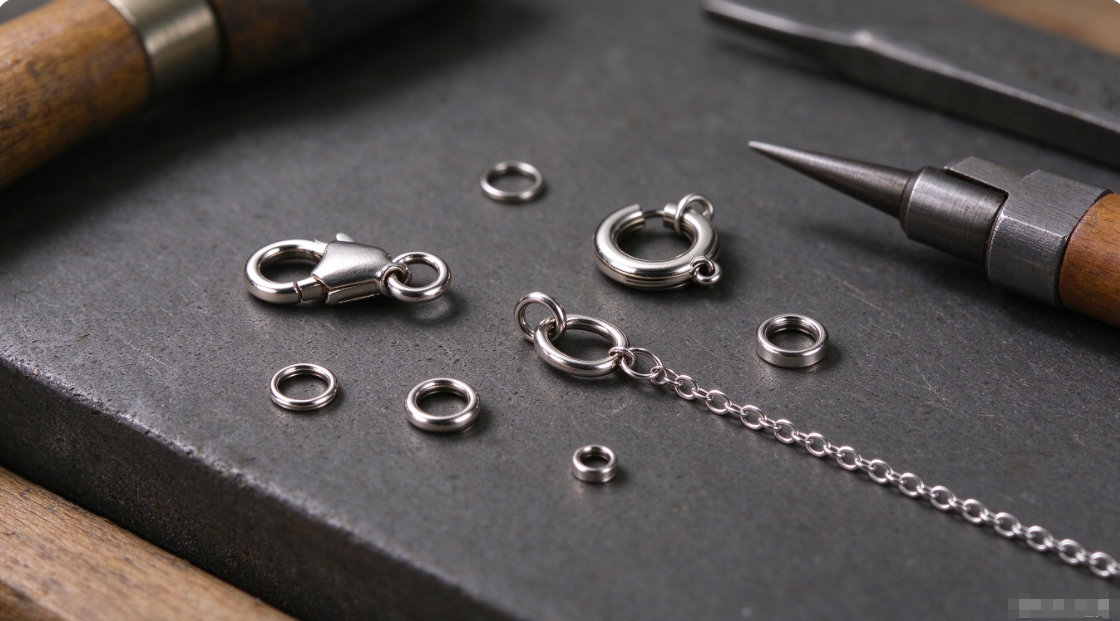
Some jewelry clasps, including spring ring and lobster clasps, rely on internal spring mechanisms.
If the spring does not return to its closed position properly, the clasp may not secure the jewelry as intended.
A visual inspection alone may not reveal this problem.
During sample approval and production inspection, manufacturers should check whether the clasp opens smoothly, returns to its closed position, and remains securely engaged.
For jewelry brands, testing the actual function of a clasp is an important step before approving bulk production.
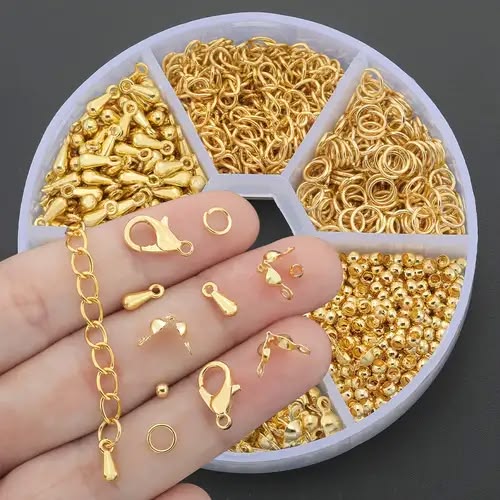
4. Jump Rings Can Be a Weak Point
Sometimes a product is reported as having a broken clasp when the actual failure occurs at the connecting ring.
Jump rings connect the clasp to the chain or other jewelry components. If the ring is too thin, improperly closed, or unsuitable for the product's weight, the connection may become vulnerable.
Manufacturers should evaluate:
Ring dimensions and wire thickness
Material suitability
Closure and alignment
Soldering requirements, where applicable
Compatibility with the clasp and chain
A well-designed clasp cannot compensate for a weak connection elsewhere in the jewelry structure.
5. The Chain and Clasp Must Work Together
The chain, clasp, and connecting components should be evaluated as one system.
A delicate chain may require a small, proportionate clasp, while a heavier bracelet or necklace may need a more substantial closure design.
During OEM/ODM jewelry development, manufacturers should consider the chain structure, clasp type, connection points, and total product weight together.
This approach helps reduce design mismatches and supports more consistent product performance.
6. Bracelet Clasps Need Special Attention
Bracelets often experience frequent movement and contact with clothing, desks, bags, and other surfaces.
Customers may also need to open and close a bracelet using one hand.
A suitable bracelet clasp should balance:
Secure closure
Ease of operation
Wearing comfort
Appropriate size
Visual consistency with the design
Physical sample testing is particularly valuable because it allows brands to evaluate the clasp under realistic wearing conditions.
7. Customer Experience Is Part of Product Quality
A clasp may close securely but still create a poor customer experience if it is difficult to operate.
During sample evaluation, jewelry brands should ask:
Can the clasp be opened without excessive effort?
Does it close smoothly?
Does it feel secure when fastened?
Is it comfortable during wear?
Is it easy to use for the target customer?
These details influence how customers perceive the quality of the finished product.
For jewelry manufacturers, functional quality and user experience should be considered alongside appearance.
8. Jewelry Weight Influences Clasp Selection
A closure system must be suitable for the product it supports.
For example, a necklace with a large pendant may place different demands on its connections than a lightweight minimalist necklace.
Weight distribution, chain construction, and connection design should therefore be considered during product development.
For custom jewelry projects, CAD design and physical sampling can help manufacturers review component proportions and identify potential issues before mass production.
9. Proper Assembly Helps Prevent Clasp Failure
Even well-made components can fail if they are assembled incorrectly.
Manufacturing teams should inspect connection points, jump rings, soldered areas where applicable, alignment, and clasp movement.
Consistent assembly procedures are particularly important during bulk production. A repeated assembly error can affect many units if it is not identified early.
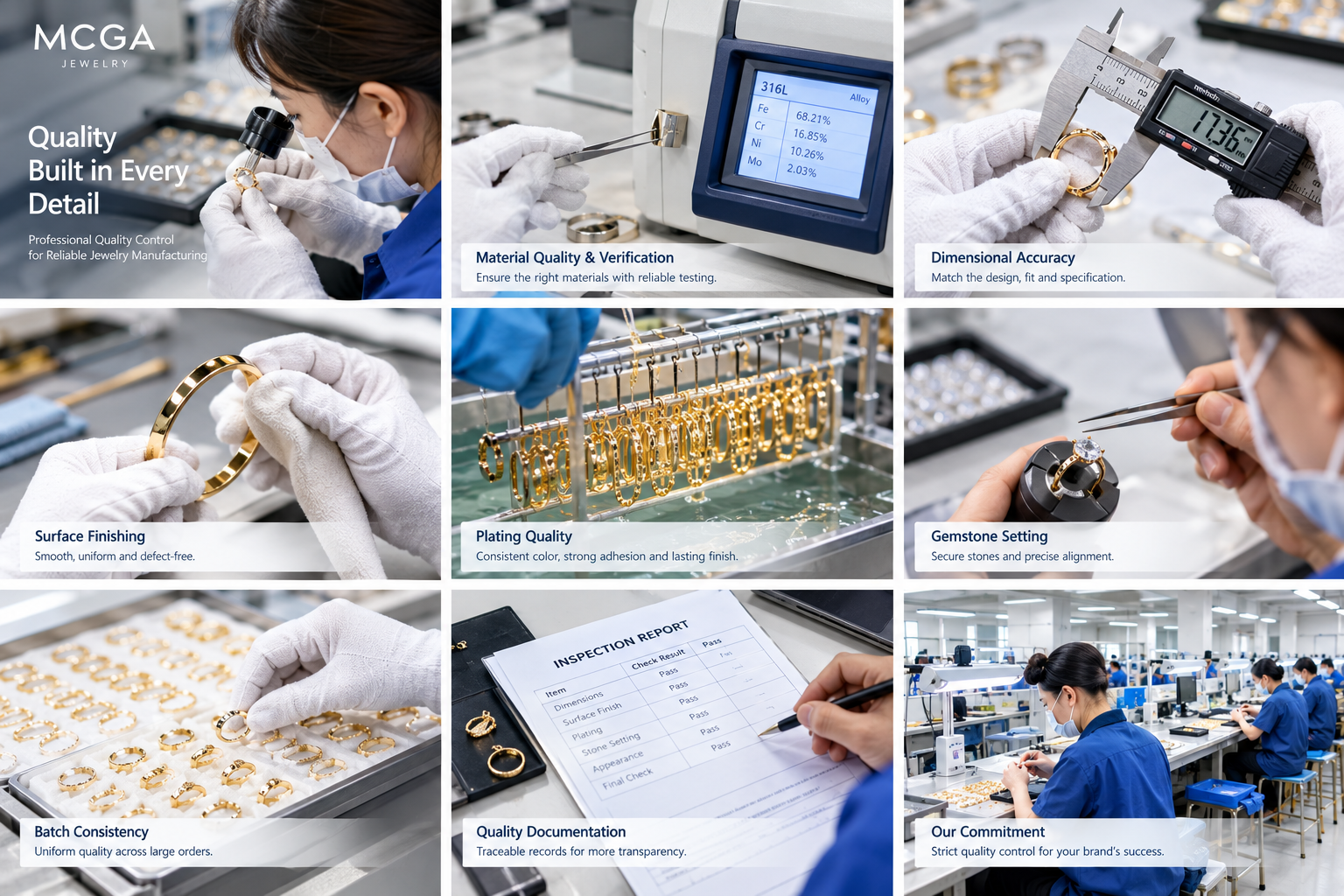
A structured jewelry manufacturing quality control process helps identify potential issues before products reach the final packaging stage.
10. Polishing Must Preserve Component Function
Polishing improves the appearance and surface quality of jewelry, but small functional components require careful handling.
Excessive material removal or improper finishing may affect delicate connection areas or component dimensions.
Manufacturers need to balance surface appearance with structural integrity, ensuring that the finished jewelry looks refined while retaining its intended function.
For jewelry brands, the approved sample should establish expectations for both appearance and functionality.
11. Plating Should Not Interfere with Clasp Movement
Surface finishing is another important consideration for plated jewelry.
The finishing process should preserve the intended movement of functional components. After plating, clasps should still open and close properly.
MCGA Jewelry supports jewelry manufacturing using materials including 316L stainless steel, brass, and 925 sterling silver, with finishing options selected according to the material and product requirements.
Depending on the project, surface treatments may include PVD coating, water plating, and polishing.
Post-finishing inspection should check the appearance of the coating as well as the function of moving components.
12. Visual Inspection and Functional Inspection Are Different
A clasp may look flawless but still fail to function correctly.
This is why a comprehensive jewelry quality inspection should include both visual and functional checks.
Depending on the product, inspection may cover:
Opening and closing action
Spring mechanism performance
Connection security
Component alignment
Surface finish
Visible manufacturing defects
Visual inspection evaluates appearance, while functional inspection evaluates how the product works.
Both are important for finished jewelry quality.
13. Check Clasps During Sample Approval
Brands should evaluate the closure system before approving bulk production.
During sample review:
Open and close the clasp repeatedly.
Wear the jewelry and evaluate comfort.
Check jump rings and other connections.
Confirm that the clasp closes correctly.
Review ease of use and overall design proportions.
If the clasp feels unsuitable, discuss alternatives with the manufacturer before approving the sample.
Early adjustments are generally easier to manage than correcting a problem after mass production.
14. Maintain Consistent Clasp Specifications for Repeat Orders
When a jewelry design becomes a bestseller, repeat orders should maintain the approved product specifications.
Manufacturing records should identify relevant details, including:
Clasp type and dimensions
Material
Surface finish
Connection components
Assembly requirements
A replacement clasp may look similar but differ in dimensions, mechanism, or performance.
Controlled specifications and reference samples help manufacturers maintain consistency across production batches.
15. Inspect the Complete Jewelry Product
The clasp should never be evaluated in isolation.
For a necklace, quality control may cover the chain, pendant, bail, jump rings, clasp, extension chain, gemstone setting, plating, and logo.
For a bracelet, the inspection process should consider the complete closure system and how it works with the rest of the design.
The customer receives one finished product, so manufacturing quality control should evaluate the product as a whole.
How MCGA Jewelry Supports Reliable Jewelry Manufacturing
MCGA Jewelry is a Vietnam-based jewelry manufacturer providing OEM/ODM jewelry manufacturing for brands, wholesalers, retailers, and independent designers.
Our manufacturing capabilities support different stages of product development, from sampling and production to finishing, quality control, and packaging.
Depending on the design and material, our production processes can include:
Product development and sampling
Casting and CNC machining
Welding and assembly
Polishing and surface finishing
PVD coating and water plating
Gemstone setting
Quality inspection
Packaging
We work with 316L stainless steel, brass, and 925 sterling silver to support different jewelry collections and market requirements.
For custom projects, clasp selection and connection design can be reviewed alongside product dimensions, materials, finishing requirements, and intended use.
Our goal is to help B2B customers develop jewelry that meets their agreed specifications for appearance, functionality, and production consistency.
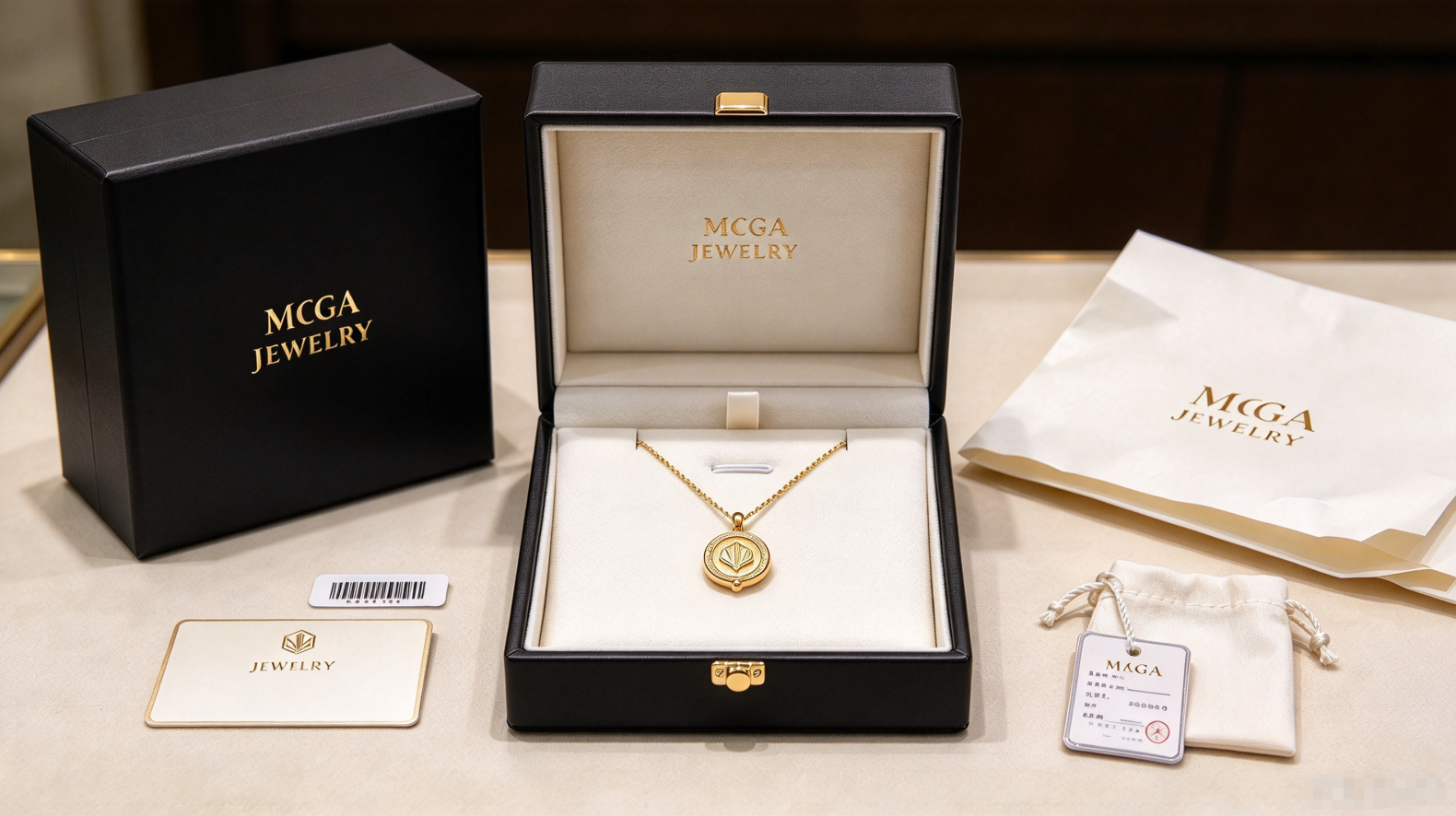
Multi-Stage Quality Control Helps Identify Problems Earlier
Identifying a functional issue during product development or assembly can help reduce the risk of repeated problems in finished products.
A structured quality control process may include checks during assembly, after surface finishing, and before final packaging.
For clasp-related projects, relevant inspection points can include closure function, connection security, alignment, and the condition of the finished surface.
Inspection requirements should be defined according to the product design and customer specifications.
For B2B buyers, clear quality standards and documented approvals help establish consistent expectations for samples and bulk orders.
After-Sales Support and Long-Term Product Quality
Jewelry experiences real-world wear, and products may require maintenance or repair over time.
For brands and wholesalers, it is important to understand the manufacturer's procedures for handling quality concerns, replacement requests, and after-sales communication before confirming an order.
Clear product specifications, approved samples, and production records can also make it easier to investigate issues and improve future batches.
A reliable manufacturing partnership should support both product development and ongoing production needs.
Conclusion
Jewelry clasps may be small, but they are critical functional components.
Clasp size, spring mechanisms, jump rings, chain construction, jewelry weight, assembly, polishing, plating, and inspection can all affect product performance.
For jewelry brands, the best approach is to evaluate the entire closure system during product development, sample approval, and production quality control.
Do not ask only:
“Does the clasp look good?”
Also ask:
“Does the clasp work reliably as part of the finished jewelry?”
At MCGA Jewelry, we support B2B brands with custom jewelry development and manufacturing in Vietnam. By considering design specifications, materials, finishing, and quality requirements together, brands and manufacturers can work toward more consistent finished products.
Developing a custom necklace or bracelet collection?
📩 Contact MCGA Jewelry to discuss your design, material options, and manufacturing requirements.