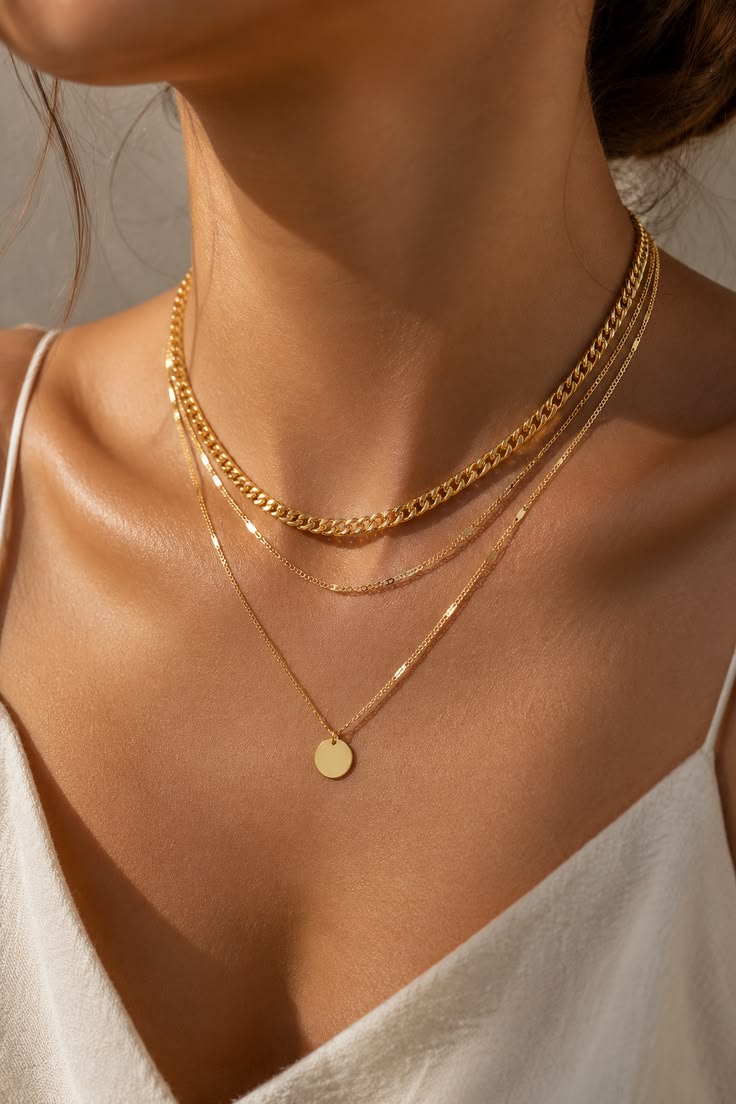
Gold vermeil jewelry has become a popular choice for jewelry brands looking to combine a premium gold appearance with a more accessible price point than solid gold.
Unlike conventional gold-plated jewelry, gold vermeil uses 925 sterling silver as the base material and a relatively thick layer of genuine gold. This combination makes it particularly suitable for demi-fine jewelry, affordable luxury collections, personalized jewelry, and premium everyday pieces.
For brands and B2B jewelry buyers, however, the term "gold vermeil" involves more than simply applying gold to silver. Material selection, gold purity, plating thickness, surface preparation, finishing, and quality control all influence the final product.
In this guide, we'll explain what gold vermeil jewelry is, how it is manufactured, why 2.5 microns matters, how it compares with other gold jewelry finishes, and what brands should consider when sourcing gold vermeil jewelry from a manufacturer.
What Is Gold Vermeil Jewelry?
Gold vermeil is jewelry made from a sterling silver base coated with genuine gold.
This is one of the most important differences between vermeil and standard gold-plated jewelry.
While gold plating can be applied to different base metals such as brass, copper, or stainless steel, vermeil specifically uses sterling silver as the core material.
The commonly referenced U.S. requirements for vermeil include:
A sterling silver base
Gold with a minimum purity of 10K
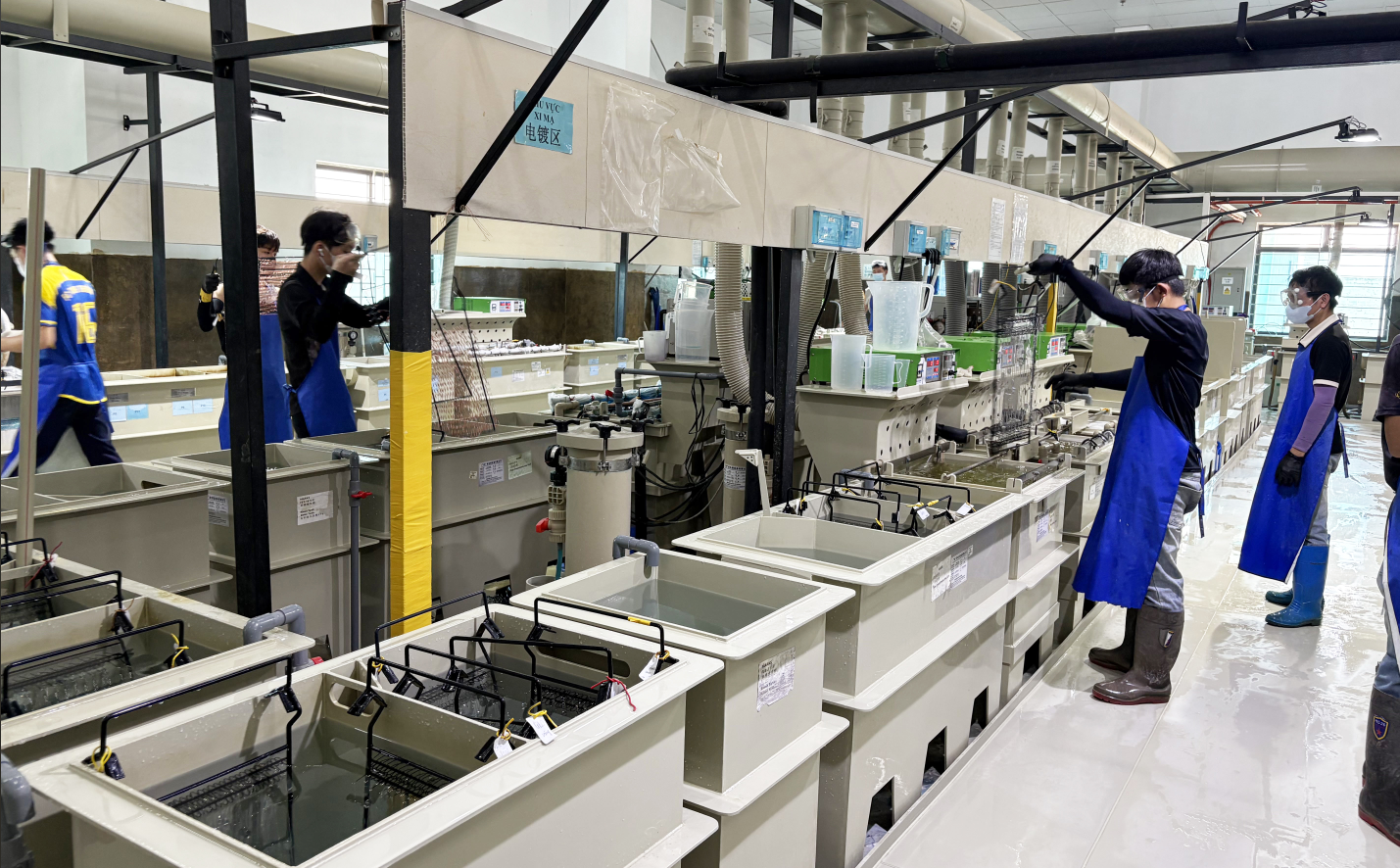
A gold layer with a minimum thickness of 2.5 microns
Many jewelry brands choose 14K or 18K gold depending on their desired color, product positioning, and target retail price.
Why Does 2.5 Microns Matter?
Gold plating thickness is an important specification when developing vermeil jewelry.
A 2.5-micron gold layer is significantly thicker than the very thin decorative coatings often used in basic fashion jewelry. A thicker layer can provide better resistance to everyday surface wear, although actual performance also depends on the base material, surface preparation, plating process, usage, and care.
For B2B buyers, plating thickness should therefore be considered together with:
Gold purity
Base material
Surface preparation
Plating process
Adhesion
Quality control
Intended product usage
The thickness of the gold layer alone does not determine the overall quality of a piece.
Gold Vermeil Materials: What Is It Made Of?
A typical gold vermeil product consists of two primary materials:
1. 925 Sterling Silver
The core of the jewelry is 925 sterling silver, meaning the material contains 92.5% silver, with the remaining portion typically made up of other metals to improve strength and workability.
Sterling silver provides a premium foundation for vermeil jewelry and is one of the main reasons vermeil occupies a different market position from conventional fashion jewelry.
2. Genuine Gold
The outer layer is made from genuine gold.
Brands can select different gold purities and colors depending on their collection, including:
10K gold
14K gold
18K gold
Yellow gold
Rose gold
White gold
The final color and appearance depend on the gold alloy and manufacturing specifications.
How Is Gold Vermeil Jewelry Made?
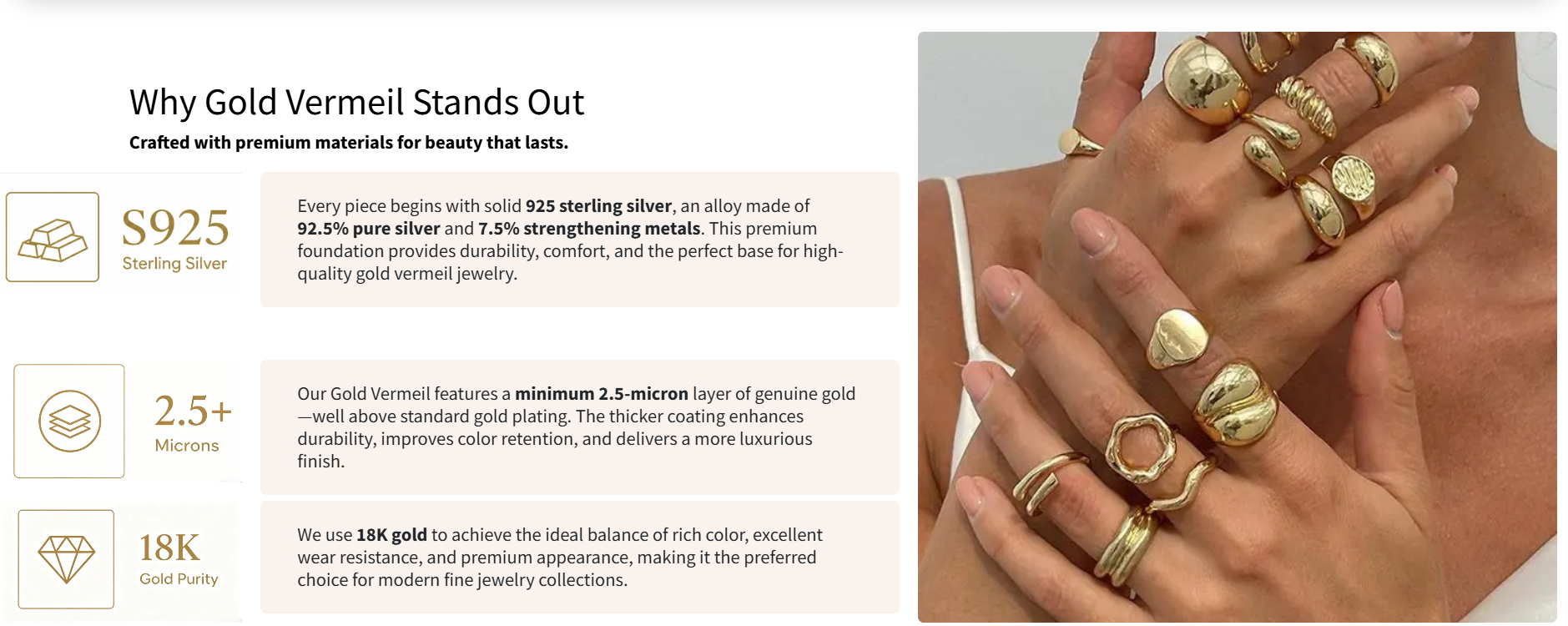
Professional gold vermeil manufacturing involves several stages. The gold plating itself is only one part of the process.
Step 1: Sterling Silver Production
The jewelry first needs to be manufactured from sterling silver.
Depending on the design, manufacturers may use processes such as:
Casting
CNC machining
Stamping
Cutting
Forming
Stone setting
For custom jewelry, the process usually begins with a design file, sketch, reference sample, or 3D model.
A suitable manufacturing process is selected based on the design complexity, dimensions, quantity, and target cost.
Step 2: Polishing and Surface Preparation
After forming the jewelry, the silver surface needs to be carefully finished.
Polishing removes or reduces:
Scratches
Rough edges
Casting marks
Surface imperfections
Manufacturing residue
This stage is especially important because the final gold layer follows the surface underneath it.
A poor surface cannot be completely corrected by gold plating.
For this reason, professional jewelry manufacturing requires careful control before the plating stage.
Step 3: Cleaning
Before electroplating, the jewelry must be thoroughly cleaned.
Manufacturing and polishing can leave behind:
Oil
Dust
Fingerprints
Polishing compounds
Other contaminants
Ultrasonic cleaning and other preparation processes can help ensure that the surface is ready for plating.
Proper cleaning contributes to better coating adhesion and more consistent plating results.
Step 4: Gold Electroplating
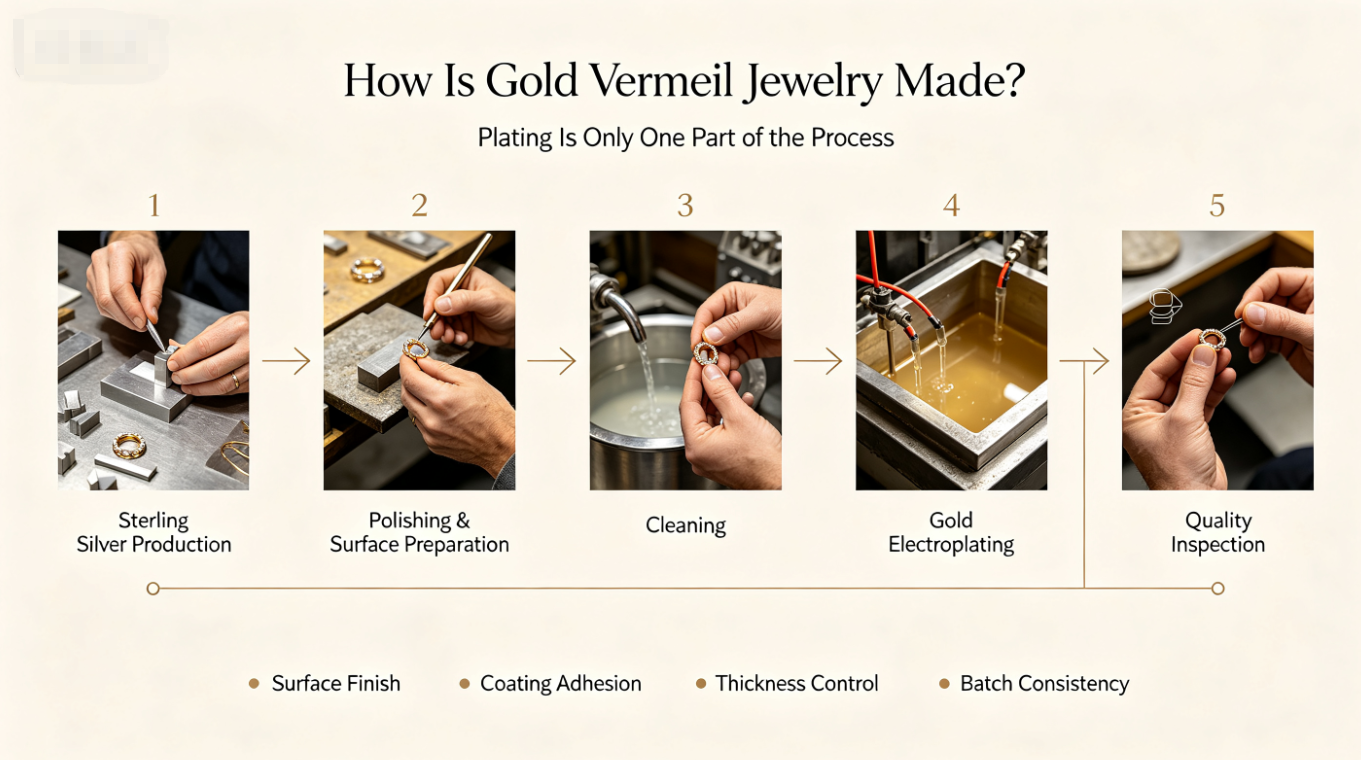
The prepared sterling silver jewelry is placed into a gold electroplating system.
During electroplating, electrical current is used to deposit gold onto the jewelry surface.
Manufacturers control parameters such as:
Gold purity
Plating thickness
Color
Current
Processing time
Surface condition
For products marketed as gold vermeil under applicable U.S. requirements, the gold layer should meet the 2.5-micron minimum thickness.
For B2B jewelry buyers, it is useful to confirm the actual plating specification with the manufacturer instead of relying only on terms such as "thick gold plating."
Step 5: Quality Inspection
After plating, the jewelry goes through inspection.
Typical quality-control checks may include:
Gold plating thickness
Color consistency
Surface finish
Plating adhesion
Scratches
Uneven coating
Product dimensions
Stone setting
Overall appearance
For wholesale and OEM production, consistent quality between batches is particularly important.
A reliable manufacturer should have quality control throughout production rather than relying only on a final inspection.
For more information about MCGA's manufacturing and quality-control capabilities, see our [Jewelry OEM/ODM Services].
Gold Vermeil vs Gold Plated vs Gold Filled
For jewelry brands, choosing between vermeil, gold plated, and gold filled depends on the desired product positioning, durability, material cost, and target customer.
| Feature | Gold Plated | Gold Vermeil | Gold Filled |
|---|---|---|---|
| Base Material | Brass, copper, stainless steel, etc. | 925 sterling silver | Commonly brass or silver |
| Gold | Genuine gold layer | Genuine gold layer | Mechanically bonded gold layer |
| Typical Positioning | Fashion jewelry | Demi-fine / affordable luxury | Premium jewelry |
| Gold Thickness | Varies by specification | Minimum 2.5 microns for vermeil under commonly referenced U.S. requirements | Gold makes up at least 5% of total weight under the common U.S. definition |
| Durability | Depends on coating system | Generally higher than very thin plating | Generally high |
| Material Cost | Lower | Medium | Higher |
| Best For | Trend-focused collections | Premium everyday collections | Higher-end everyday jewelry |
Which Is Better for a Jewelry Brand?
There is no single answer.
Gold plated jewelry can be a practical option for fashion collections where price and trend flexibility are priorities.
Gold vermeil jewelry can be a strong choice for brands looking for a combination of genuine gold, sterling silver, premium appearance, and accessible pricing.
Gold filled jewelry may be suitable for brands looking for a mechanically bonded gold layer and higher gold content by weight.
The right option depends on your:
Target market
Retail price
Product positioning
Expected wear
Design
Production budget
Brand strategy
What Are the Benefits of Gold Vermeil Jewelry?
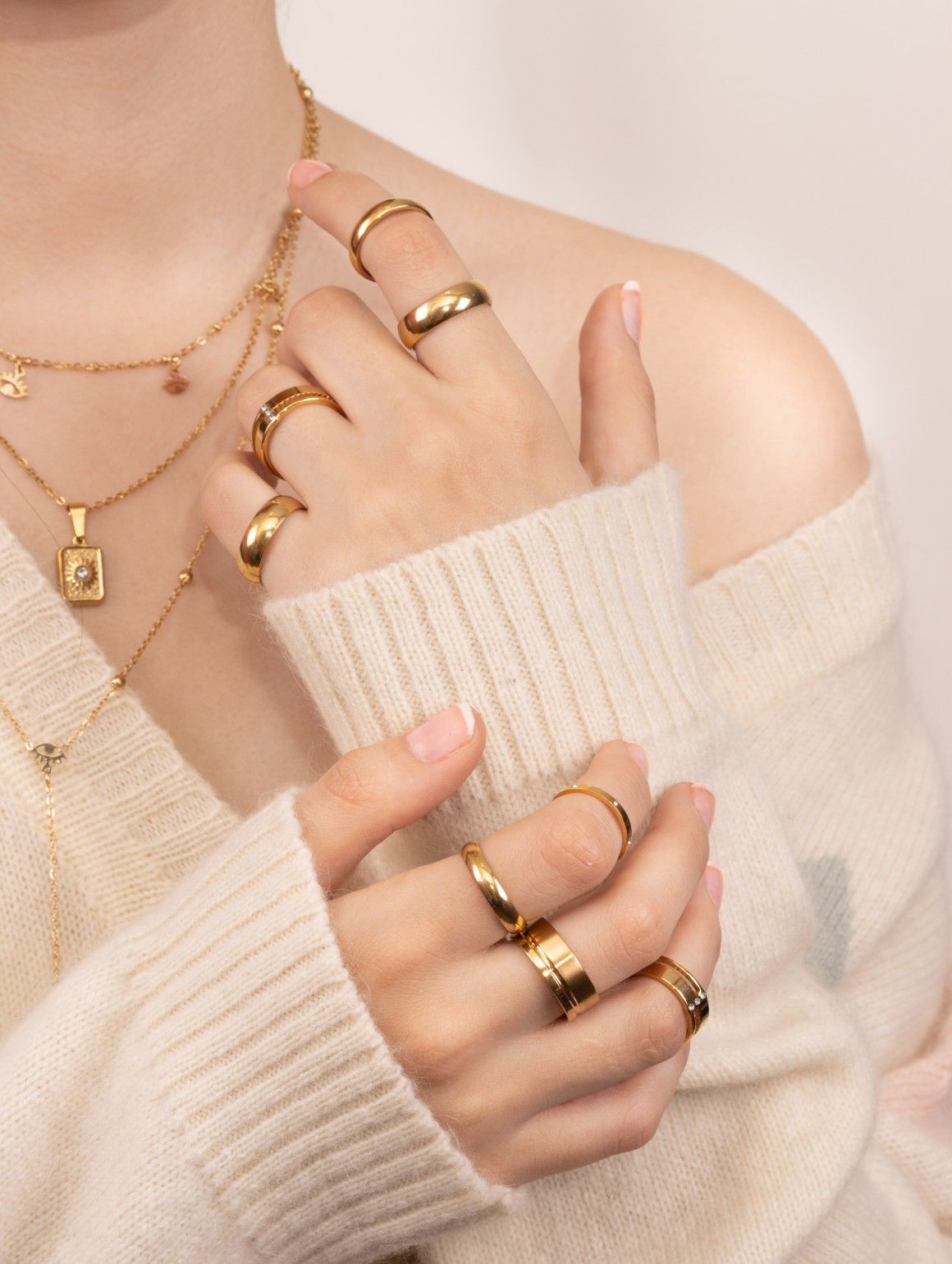
1. Premium Gold Appearance
One of the main advantages of gold vermeil jewelry is its premium appearance.
The combination of genuine gold and sterling silver creates a product positioned above many conventional fashion-jewelry options while remaining more accessible than solid gold.
This makes vermeil suitable for:
Demi-fine jewelry
Affordable luxury collections
Personalized jewelry
Premium gifts
Everyday jewelry
2. A Thicker Gold Layer
Compared with very thin gold plating, vermeil uses a substantially thicker gold layer.
The commonly referenced 2.5-micron minimum gives brands a clearer material specification when developing products.
However, thickness should not be considered in isolation.
Actual wear performance also depends on:
Surface preparation
Gold alloy
Plating method
Adhesion
Product design
Friction
Exposure to chemicals
Customer care
3. Sterling Silver Base
The use of 925 sterling silver gives vermeil a more premium material foundation.
For brands building a demi-fine or affordable-luxury collection, this can help differentiate the product from jewelry made primarily with lower-cost base metals.
4. More Accessible Than Solid Gold
Solid gold jewelry provides a high-value material structure, but its material cost is significantly higher.
Gold vermeil offers another route:
Sterling Silver + Genuine Gold + Premium Appearance
This allows brands to develop products with a luxury-oriented appearance without using solid gold throughout the entire piece.
For startups and growing brands, this can make product development more flexible.
5. Suitable for Custom Jewelry
Gold vermeil can be used across many jewelry categories, including:
Necklaces
Pendants
Rings
Earrings
Bracelets
Initial jewelry
Birthstone jewelry
Personalized jewelry
Custom logo jewelry
For OEM and ODM jewelry projects, manufacturers can work with brands on design development, materials, finishing, packaging, and production.
Explore [MCGA's OEM/ODM jewelry manufacturing services] to learn more about the complete process from design to mass production.
Popular Gold Vermeil Jewelry Styles
Minimalist Jewelry
Minimalist necklaces, rings, earrings, and bracelets are well suited to vermeil because the gold finish becomes an important part of the overall visual design.
Simple shapes also allow brands to create coordinated collections and layering pieces.
Personalized Jewelry
Gold vermeil is also suitable for:
Name necklaces
Initial pendants
Engraved bracelets
Custom rings
Birthstone jewelry
Personalized products can help brands create gift-oriented collections with higher perceived value.
Layered Necklaces and Stackable Rings
Vermeil can also be used across coordinated jewelry collections.
Brands can combine:
Chain necklaces
Pendants
Rings
Bracelets
Earrings
to create matching or layered product lines.
Why Should Jewelry Brands Consider Gold Vermeil?
Material selection directly affects a jewelry brand's product positioning.
For brands targeting affordable luxury jewelry or demi-fine jewelry, vermeil can provide a useful balance between premium materials and production cost.
For Jewelry Startups
Gold vermeil allows new brands to develop a more premium product range without immediately moving into solid-gold production.
For Private-Label Jewelry Brands
Manufacturers can customize:
Jewelry shapes
Dimensions
Logos
Engraving
Plating color
Gold purity
Plating thickness
Stones
Packaging
This allows brands to create products that are more closely aligned with their own identity.
For Wholesale Buyers
Gold vermeil can help buyers build a premium product category while maintaining a lower material cost than solid gold.
For OEM/ODM Projects
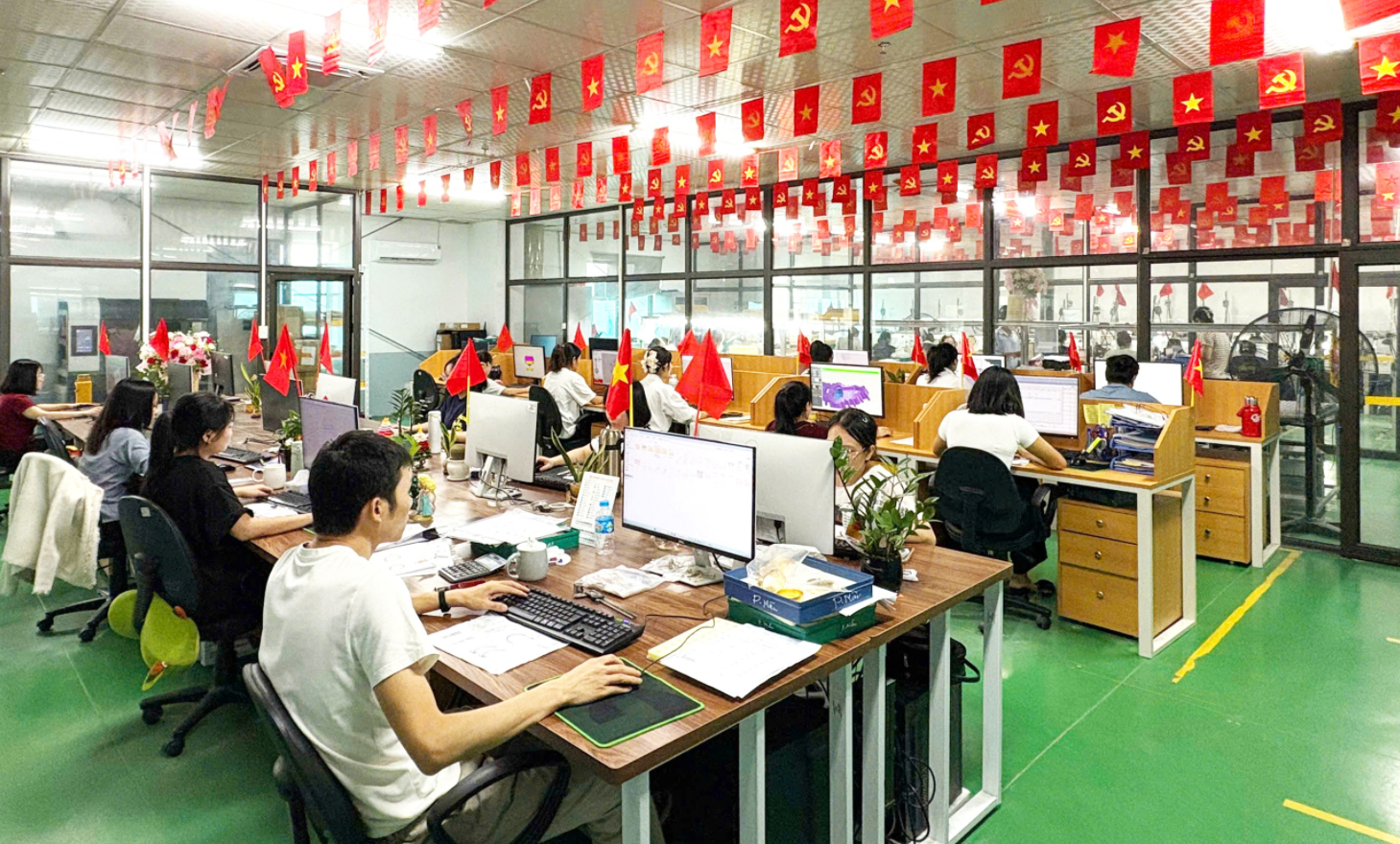
A professional OEM jewelry manufacturer can support the entire product-development process, from initial sketches and CAD modeling to prototypes, finishing, quality inspection, and bulk production.
MCGA provides OEM/ODM jewelry manufacturing services covering design development, prototyping, production, finishing, QC, and packaging.
How to Choose a Gold Vermeil Jewelry Manufacturer
Choosing the right manufacturer is just as important as choosing the material.
Before placing an order, B2B buyers should ask several key questions.
1. What Base Material Is Used?
Confirm that the product uses 925 sterling silver if it is being marketed as gold vermeil.
2. What Gold Purity Is Available?
Ask whether the manufacturer can provide 10K, 14K, 18K, or other specifications according to your product requirements.
3. What Is the Plating Thickness?
Do not simply ask whether the product is "gold plated."
Specify the required thickness, such as 2.5 microns, and confirm how it is measured.
4. How Is Plating Quality Tested?
Ask about:
Thickness testing
Adhesion testing
Surface inspection
Color consistency
Wear testing
5. Can the Manufacturer Handle Custom Designs?
For OEM projects, check whether the factory can work from:
Sketches
CAD files
3D models
Reference samples
Product specifications
6. Can They Support Bulk Production?
Sampling quality is important, but the real challenge is maintaining consistent quality during mass production.
Ask about:
Production capacity
QC procedures
MOQ
Lead time
Packaging
Shipping
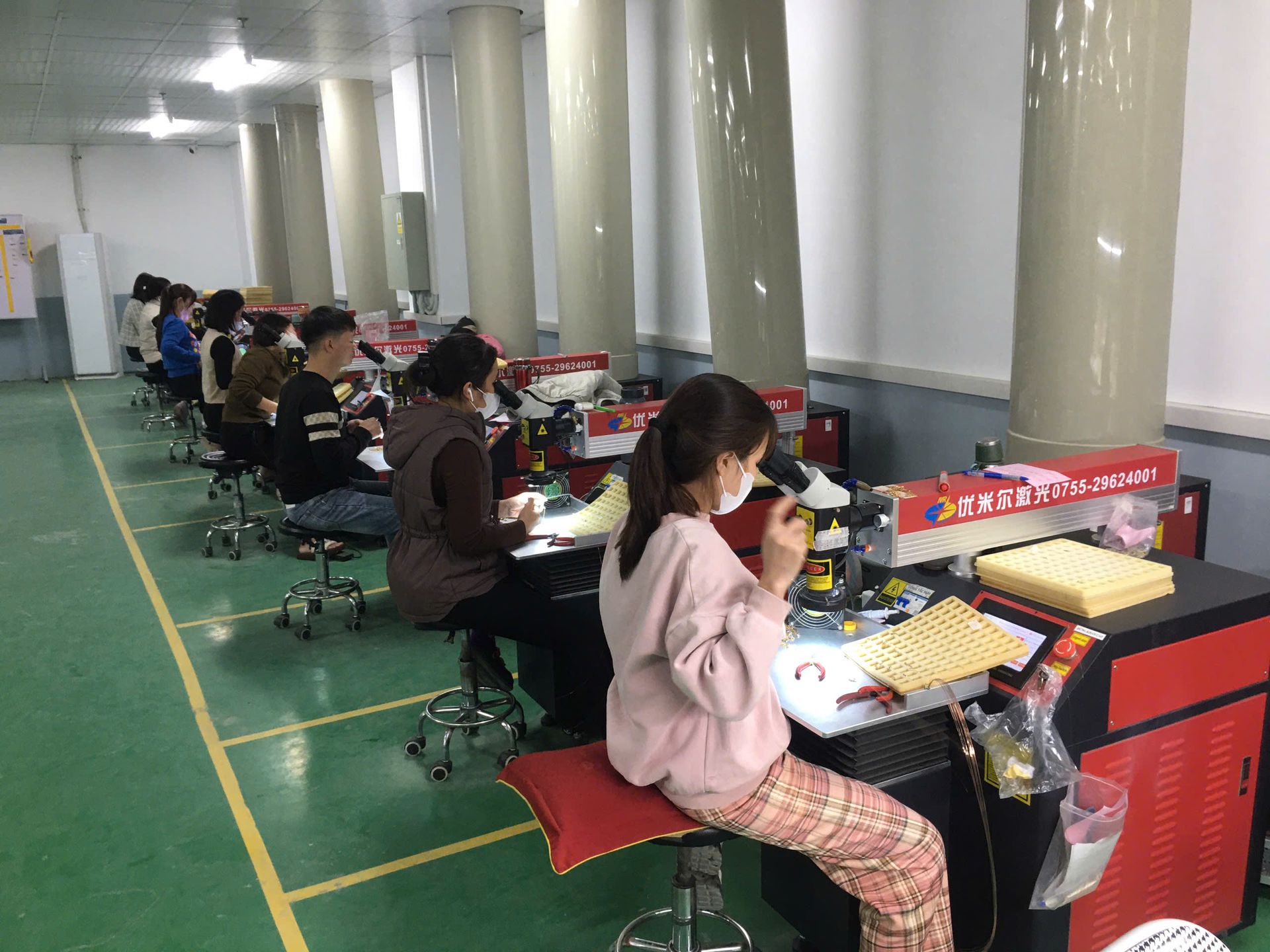
MCGA provides OEM/ODM jewelry manufacturing from product development through mass production and packaging. Our production capabilities cover multiple jewelry materials and finishing processes for global B2B customers.
Gold Vermeil Jewelry: Is It Right for Your Brand?
Gold vermeil is more than simply a gold-colored finish.
The final product depends on the complete manufacturing chain:
925 Sterling Silver → Surface Preparation → Cleaning → Gold Plating → Thickness Control → Quality Inspection
For jewelry brands, the key is to define the product specifications clearly before production.
When sourcing gold vermeil jewelry, make sure your manufacturer can clearly confirm:
Base material
Gold purity
Plating thickness
Surface finish
Quality-control process
MOQ
Sampling process
Production lead time
Packaging requirements
A clear specification helps reduce misunderstandings and makes it easier to maintain consistent quality across future production runs.
Build Your Gold Vermeil Collection with MCGA Jewelry
Looking for an experienced partner for your next custom gold vermeil jewelry project?
MCGA Jewelry provides OEM and ODM jewelry manufacturing services for brands, retailers, wholesalers, and growing jewelry businesses.
From design development and prototyping to production, finishing, QC, and packaging, we help turn jewelry concepts into production-ready products.
Whether you're launching a new affordable-luxury collection or expanding an existing jewelry line, our team can work with you on material selection, product specifications, and manufacturing requirements.
Start Your Jewelry Project
Send us your design, reference images, material requirements, estimated quantity, and target market.
Let's discuss your project and find the right manufacturing solution for your brand.
[Get a Quote]